Los Angeles County · 24/7 Emergency Service
Water damage restoration in Covina, CA 91722, 91723, 91724Local crew, 26-minute average arrival, 24 hours a day.
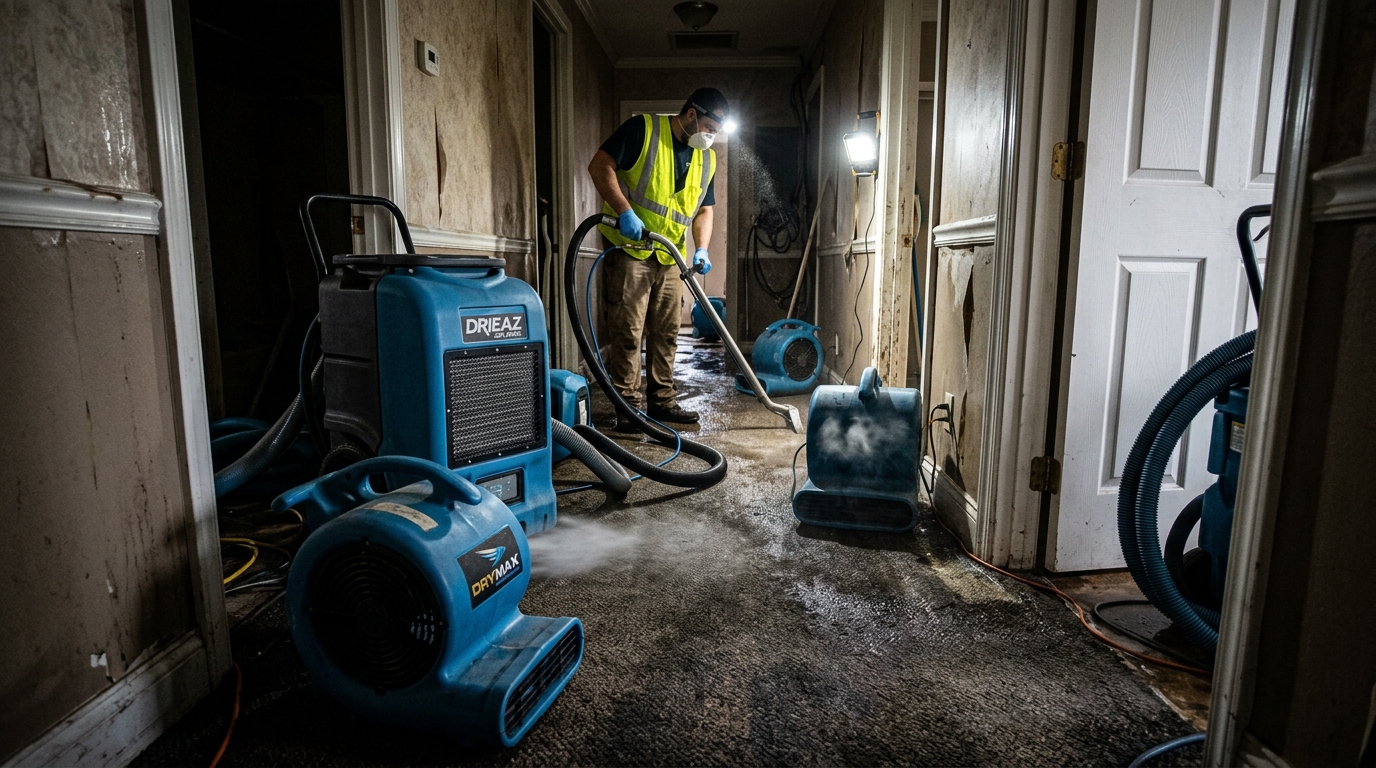
Our crew serves Covina and surrounding Los Angeles County. From burst pipes and storm flooding to fire damage and mold — we handle extraction, drying, and complete reconstruction under one contract.
26min
Average arrival in Covina5
Trucks stationed locally24/7
Including holidays0
Call-out feeOur services in Covina
Complete damage restoration — water, fire, mold and rebuild.
One crew carries the job from extraction through rebuild.
Flood Damage Restoration
Storm surge, flash floods and rising water damage — extraction, sanitisation and
Water Extraction
Truck-mounted and portable extractors remove standing water at up to 3,000 gallo
Sewage Cleanup
IICRC S500-compliant sewage cleanup with containment, disinfection, and document
Fire Damage Restoration
Board-up, debris removal, smoke neutralisation, structural repair and rebuild.
Smoke Damage Cleanup
HEPA-filtered air scrubbing, thermal deodorisation, and soot removal from every
Mold Remediation
Containment, HEPA filtration, antimicrobial treatment and third-party lab cleara
Mold Inspection
Third-party air sampling, surface testing, moisture mapping and detailed reports
Storm Damage Restoration
Emergency tarping, board-up, water removal and structural repair after storms.
Reconstruction Services
Drywall, framing, flooring, paint and finish — one crew from start to finish.
Covina specifics
Neighbourhoods we serve in the 91722, 91723 and 91724 ZIPs.
We know Covina. Our technicians carry FLIR thermal cameras and Protimeter moisture meters on every call.
- Downtown Covina
- Covina Hills
- Charter Oak
- Citrus
- South Hills
- Barranca
- Vincent
- Badillo
- 91722
- 91723
- 91724
Covina branch
- Average arrival
- 26 min
- Dispatch line
- (626) 778-2400
- Hours
- 24 / 7 / 365
- County
- Los Angeles
- Licence
- CSLB #1094427
- Certification
- IICRC WRT & ASD
Nearby
We also cover these Los Angeles County cities.
Guides
Read our latest guides.
Questions
The ten things people ask at 2am.
Straight answers, including the ones that don't help us. If yours isn't here, the dispatch line is answered by somebody who can actually answer it.
Call (626) 778-2400What should I do in the first ten minutes?
Stop the water, then stop the electricity to the affected area if you can reach the breaker without standing in water. In that order.
- Shut the main water valve — usually at the street, in the garage, or on the side of the house near the hose bib.
- Cut power to affected rooms at the breaker. If the panel is in a wet area, don't touch it — wait for us or the utility.
- Lift what you can: rugs, electronics, cardboard boxes, furniture legs onto blocks or foil.
- Photograph everything before anything moves. It's the cheapest thing you'll do for your claim.
- Don't run a household fan across sewage or unknown water — that aerosolises contamination.
Then call. We can talk you through anything else while the truck is loading.
Does homeowners insurance cover water damage?
Usually yes for sudden and accidental discharge — a burst supply line, a failed water heater, an overflowing appliance, a pipe that split in a wall. That's the classic covered claim.
Usually no for two things. Gradual damage from a leak that was seeping for months tends to be excluded as a maintenance issue. And flood — rising surface water, storm surge, mudflow — is excluded from standard homeowners policies almost everywhere and needs separate flood coverage, typically through the National Flood Insurance Program.
Sewer and drain backup is often a cheap optional endorsement rather than standard cover, so it's worth checking whether you bought it. We're a restoration company, not your insurer or a public adjuster — read your own declarations page or ask your agent before relying on any of this. What we can do is document the loss properly so the claim is decided on evidence.
How fast can you actually get here?
Our average across California metro areas is about forty-five minutes, because crews are stationed in thirty hub cities rather than dispatched from one depot. Rural and mountain addresses take longer and we'll tell you a real number on the phone rather than a comforting one.
During a regional storm event, everybody's response time stretches — ours included. We triage by category of water and by whether the leak is still active.
How long does drying take?
Three to five days is typical for a contained residential loss caught early. Hardwood, plaster and multi-layer flooring run longer — a week or more is normal and not a sign anything is wrong.
The honest answer is that nobody can promise a day count on arrival, because drying rate depends on material, humidity and how long the water sat. What we commit to is a daily reading, so you can see the curve rather than take our word for it. Equipment comes out when the material hits dry standard, not when the schedule says.
Do I have to move out?
Often not. Most losses are contained to part of a building, and drying equipment is loud but liveable if the affected rooms aren't ones you sleep in.
You should plan to be elsewhere if the water was sewage, if mold remediation needs negative-pressure containment across a living area, if the electrical supply has to stay off, or if a kitchen or the only bathroom is out of use. If your policy includes loss-of-use cover, temporary accommodation is often part of the claim — ask your adjuster early rather than after you've paid for a hotel.
Will mold grow after this?
Mold needs moisture, an organic food source and time. Drywall paper, wood and dust supply the food, so the only variable you control is time. The widely used figure is 24 to 48 hours before growth begins on wet organic material at room temperature.
That's the whole argument for calling immediately rather than waiting to see whether it dries by itself. A dry-out inside the first day is a drying job. The same loss found three weeks later is a remediation job with containment, disposal and lab clearance, and it costs several times more.
What does it cost?
We don't quote a price over the phone, and you should be suspicious of anyone who does before seeing the moisture readings. Cost is driven by the affected area, how many material layers are wet, the category of water and how many days of equipment it takes.
What we can tell you now: there's no call-out fee, the assessment is free, and if this is an insured loss we bill your carrier directly, so your out-of-pocket is typically the deductible. You get the scope in writing before demolition starts.
Do you bill my insurance company directly?
Yes, for most major carriers. We file daily moisture logs, photographs and the drying record straight to your adjuster in the format they expect, which is usually what determines whether a claim moves or sits.
You'll still want to open the claim yourself — that call has to come from the policyholder. Do it early, even before you know the extent, because most policies require prompt notice.
Can hardwood floors be saved, or do they have to come out?
More often than people expect. Mat systems and injection drying pull water up through the boards from underneath, which can save a floor that would otherwise be demolished — and a hardwood floor is frequently the single most expensive line on the estimate.
It depends on how long the water sat, whether it reached the subfloor, and whether the boards have already cupped past the point of settling back. We'll measure and tell you honestly which way it's going, because trying and failing costs you a week.
Do you handle sewage backups?
Yes. Sewage is Category 3 water and is handled differently from a clean supply-line leak: porous material like carpet, pad and drywall is removed rather than dried, the area is contained under negative pressure, everything is disinfected, and disposal is documented.
Please don't try to clean it yourself with a shop vac and bleach. The risk isn't the smell, it's what gets aerosolised, and household fans spread it through the rest of the building.
Covina crew, on shift right now.
Tell us the address and the water source.
No call-out fee · Most carriers billed direct